We want you to be informed about your drinking water quality. The US Environmental Protection Agency (EPA) recently established standards for the PFAS family of compounds that you should be aware of.
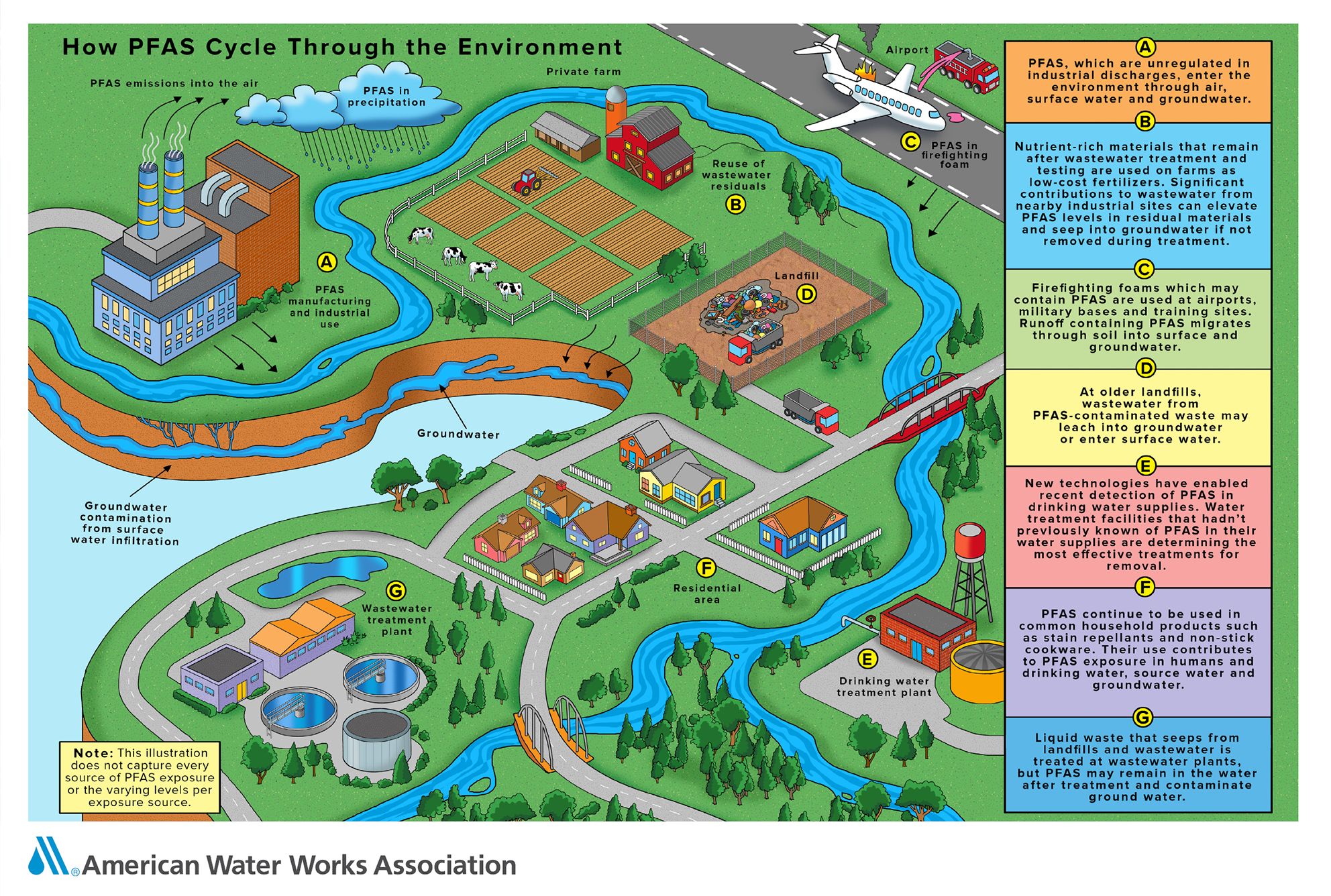
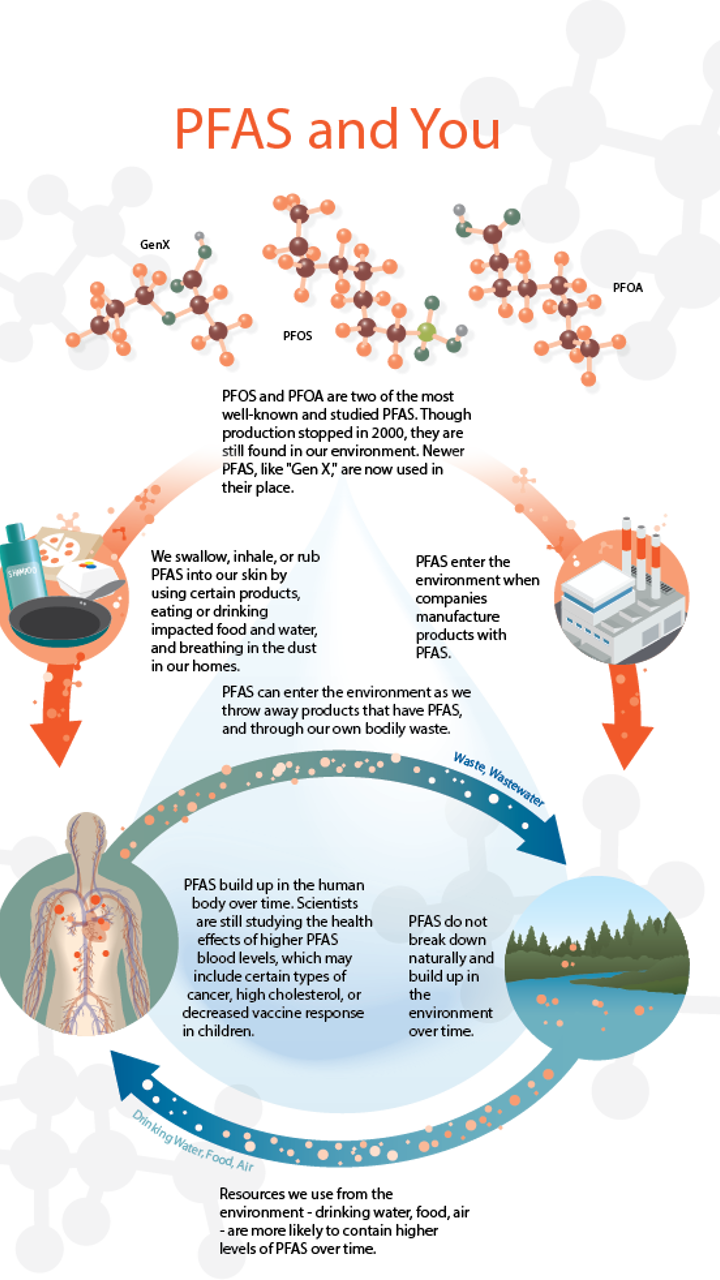
PFAS are manmade chemicals that have been widely used in industry and consumer products ranging from water-repellent textiles to firefighting foam. These chemicals can accumulate over time and have been found in both the environment and the human body. They do not break down easily in the environment or the human body and are sometimes called “forever chemicals”. PFAS, including PFHxS, have now been found in trace amounts throughout the environment in air, soil, sediment, and precipitation, as well as in rivers, lakes, seas, and groundwater.
On April 10, 2024, EPA announced and established the first-ever nationwide, legally enforceable drinking water standards to protect communities from PFAS in their drinking water.
EPA finalized a National Primary Drinking Water Regulation (NPDWR) establishing legally enforceable levels, called Maximum Contaminant Levels (MCLs), for six PFAS in drinking water. PFOA, PFOS, PFHxS, PFNA, and HFPO-DA as contaminants with individual MCLs, and PFAS mixtures containing at least two or more of PFHxS, PFNA, HFPO-DA, and PFBS using a Hazard Index MCL to account for the combined and co-occurring levels of these PFAS in drinking water. EPA also finalized health-based, non-enforceable Maximum Contaminant Level Goals (MCLGs) for these PFAS.
The final rule requires:
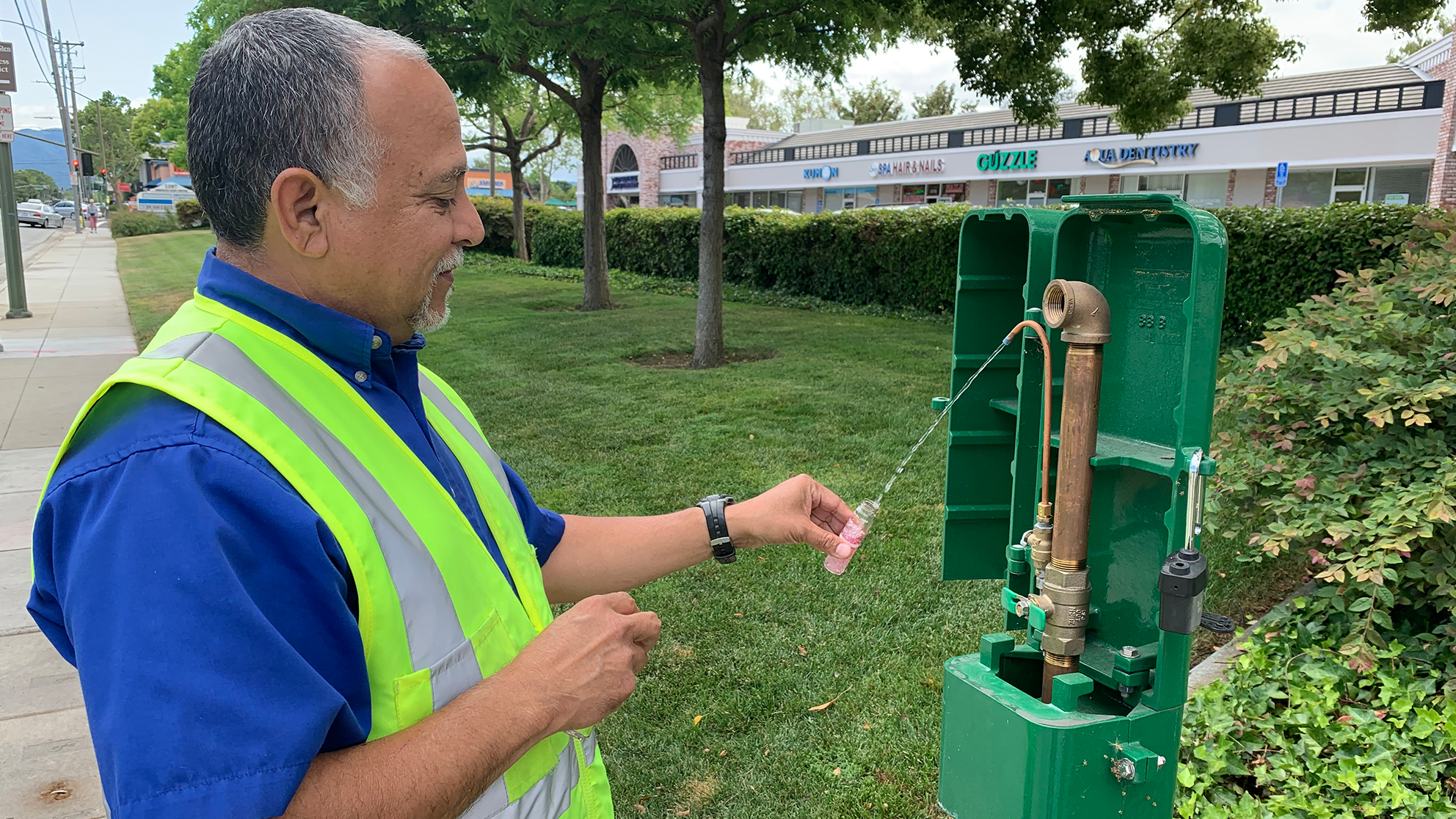
As part of our rigorous water quality testing protocols, San Jose Water (SJW) has been proactively testing all active wells throughout our service area to identify how our system may be impacted by PFAS. Since 2019, we’ve collected over 16,000 samples for PFAS. PFAS test results are available in our Consumer Confidence Report at sjwater.com/ccr.
Some scientific studies suggest that certain PFAS may affect different systems in the body. The Centers for Disease Control (CDC) National Center for Environmental Health Registry (ATSDR) are working with various partners to better understand how exposure to PFAS might affect people’s health — especially how exposure to PFAS in water and food may be harmful.
In response to data gathered during our monitoring program, SJW has successfully completed an evaluation of treatment methods to remove PFAS at two of the most impacted well fields. These studies looked at all of the treatment options for removing PFHxS from drinking water, including activated carbon, reverse osmosis, ion exchange, and nanofiltration. With the information gained from this study, SJW began designing our first treatment facility in Spring 2023. The design is expected to be completed at the end of 2024 with construction expected to begin in the near future.
There are a few options on the market that can be used for treatment. These include filter cartridges, under sink filters, and reverse osmosis units. The National Sanitation Foundation certifies water filters that reduce PFAS in drinking water. When looking for a point-of-use filter or a home treatment system, check the National Sanitation Foundation website to make sure it is certified to remove these contaminants.
SJW and Valley Water have been working closely with engineers and geologists from the San Francisco Bay Regional Water Quality Control Board to identify sites in the region that could be potential contributors to PFAS contamination. Once identified, further in-depth studies and, ultimately, cleanup of these locations will commence.
It is important for you to know that your water continues to meet all state and federal drinking water standards. Researchers across the country are working to find out more about PFAS (and its family of contaminants) and its effect on people and the environment, as well as how to remove it from drinking water.
Consult your medical professional to determine whether to test for these chemicals.
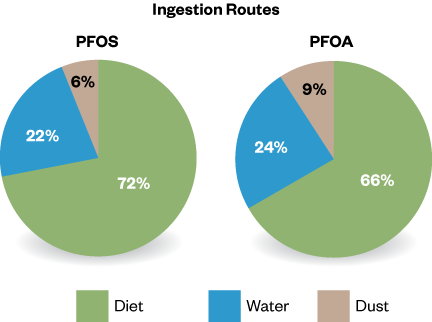
PFAS are present at low levels in some food products and in the environment (air, water, soil, etc.), meaning it is quite difficult to avoid PFAS exposure altogether. However, if you live near known sources of PFAS contamination, you can take steps to reduce your risk of exposure.
Check for contaminant advisories on water bodies where you fish:
Bottled water manufacturers are not subject to the same testing requirements as drinking water utilities. Please contact bottled water producers directly for information about any PFAS questions you may have.
All water quality data is published in our annual Consumer Confidence Report.
*Source for some included content: http://www.atsdr.cdc.gov/pfas/about