
California is prone to many disasters including earthquakes, wildfires, flooding, storms and power outages. Most Californians will experience at least one of these at some point. Being prepared for the next emergency is the best thing you can do to ensure your health and safety. As September is Emergency Preparedness Month, here are some tips to help you prepare for an emergency.
Food
Store at minimum a several-day supply of non-perishable food – preferably foods that require little to no cooking.
For more information about food preparation, visit ready.gov/food.
Water
How to Prepare Water
According to the CDC, it is recommended that you store at least one gallon of water per person per day for at least 3 days (try to store a 2- week supply if possible). This water should be used for drinking and sanitation.
Unopened commercially bought bottled water stored in a cool, dark place is the safest source of water. If you must prepare water on your own, use food-grade containers.
Water Treatment
If there is any doubt about the quality of available water, it should be purified before use. Boil vigorously for 1 minute or use (unscented) liquid household bleach (sodium hypochlorite 5.25%) as a disinfectant. Add 1/8 teaspoon of bleach per gallon of water. After adding bleach, mix thoroughly and let water stand for 30 minutes before using.
For more information about water storage and treatment, visit ready.gov/water.
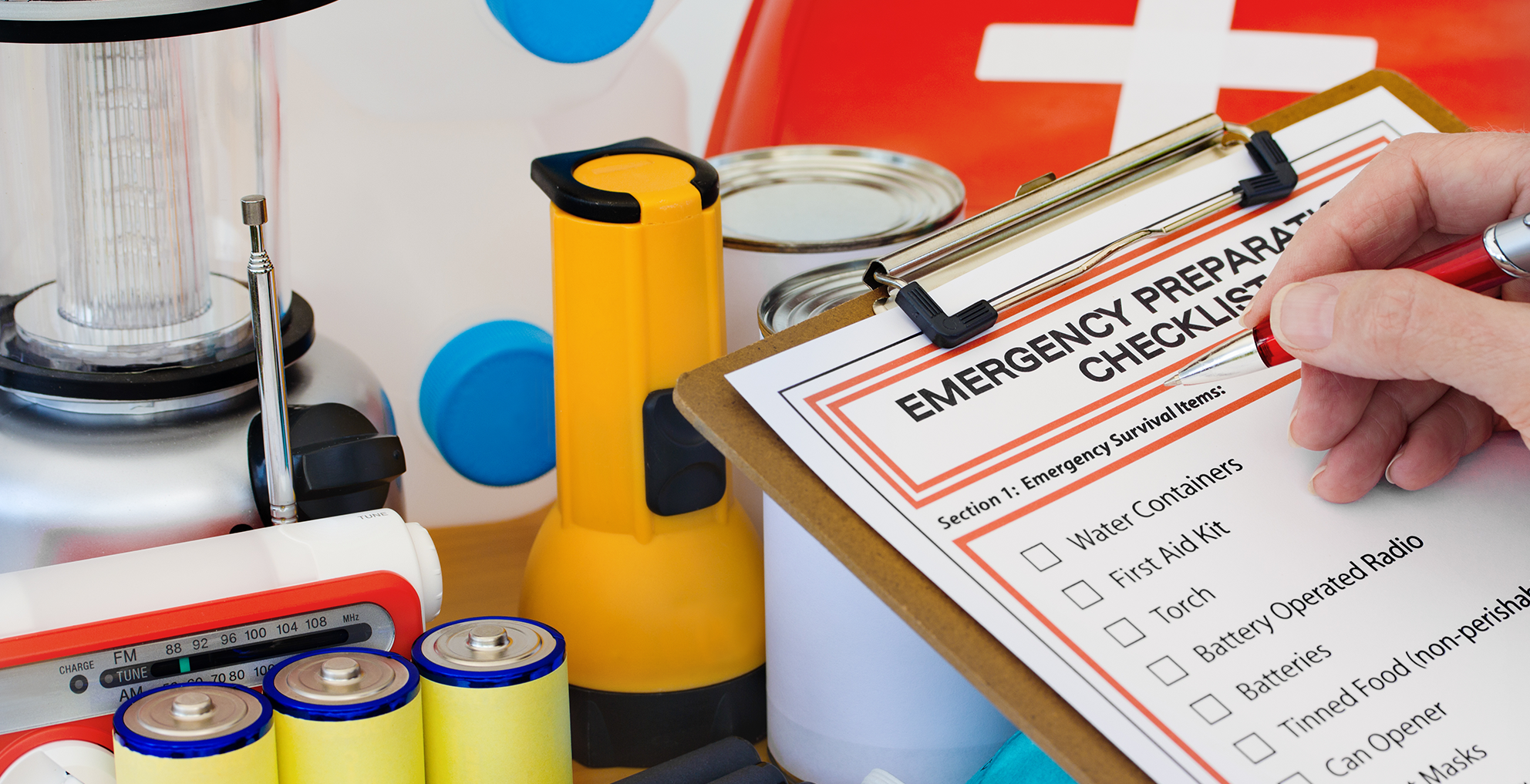
Battery-powered or hand crank radio and a NOAA Weather
Radio with tone alert
Flashlight
First aid kit
Extra batteries
Whistle (to signal for help)
Dust mask (to help filter contaminated air)
Plastic sheeting and duct tape (to shelter in place)
Moist towelettes, garbage bags and plastic ties (for personal sanitation)
Wrench or pliers (to turn off utilities)
Manual can opener (for food)
Local maps
Cell phone with chargers and a backup battery
Masks (for everyone ages 2 and above), soap, hand sanitizer, disinfecting wipes to disinfect surfaces
Prescription medications
Non-prescription medications such as pain relievers, anti-diarrhea medication, antacids or laxatives
Prescription eyeglasses and contact lens solution
Infant formula, bottles, diapers, wipes and diaper rash cream
Pet food and extra water for your pet
Cash or traveler's checks
Important family documents such as copies of insurance policies, identification and bank account records saved electronically or in a waterproof, portable container
Sleeping bag or warm blanket for each person
Complete change of clothing appropriate for your climate and sturdy shoes
Fire extinguisher
Matches in a waterproof container
Feminine supplies and personal hygiene items
Mess kits, paper cups, plates, paper towels and plastic utensils
Paper and pencil
For more information about disaster preparedness, visit ready.gov.
Additional Resources